Evaluation Targeted Productivity in Bangladesh’s Garment Sector Using Machine Learning and Deep Learning with Explainable AI: A Data-Driven Method for Enhanced Production Planning
Date:
In this talk, we explore the implementation of our research titled “Evaluation of Targeted Productivity in Bangladesh’s Garment Sector Using Machine Learning and Deep Learning with Explainable AI”
Introduction
- Garment industry contributes over 80% of Bangladesh export earnings
- Production planning often based on manual judgment
- Manual targets lead to:
- Unrealistic goals
- Inefficiency
- Resource wastage
- Need for data-driven productivity prediction
Problem Statement
- Target productivity set manually by factory managers
- Manual estimation problems:
- Personal bias
- Ignoring real-time data
- Missed deadlines
- Research gap:
- Most studies predict actual productivity
- Few studies predict optimal target productivity
Research Questions
- Can ML/DL predict targeted productivity accurately?
- Which model performs best?
- How can XAI make predictions interpretable?
Research Objectives
- Develop ML and DL models for prediction
- Identify key productivity factors
- Use SHAP and LIME for explainability
- Build transparent planning framework
Methodology
- Dataset:
- Kaggle garment productivity dataset (1197 samples)
- Additional industrial data collected
- Preprocessing:
- Missing value handling
- Outlier removal (IQR)
- Label encoding
- Standardization
Models and Evaluation
- Machine Learning models
- Deep Learning models
- Performance comparison using:
- R² score
- Cross-validation
Model Interpretability
- SHAP:
- Global feature importance
- LIME:
- Local prediction explanation
- Goal:
- Understand why a prediction is made
Key Findings
- Neural Network achieved R² = 0.987
- Important features identified:
- SMV
- Idle Men
- Style Changes
- XAI provides transparent explanations
Discussion & Implications
- Enables realistic production targets
- Reduces inefficiency
- Improves resource allocation
- Supports data-driven factory management
Conclusion
- Data-driven framework successfully developed
- Neural Network performed best
- XAI improves trust and usability
Future Work
- Use real-time data streams
- Validate across multiple factories
- Explore temporal models (RNN, LSTM)
- Develop decision support dashboard
Acknowledgement
- Thanks to Square Food & Beverage Ltd for support
Thank You
Feel free to contribute, raise issues, or suggest improvements!
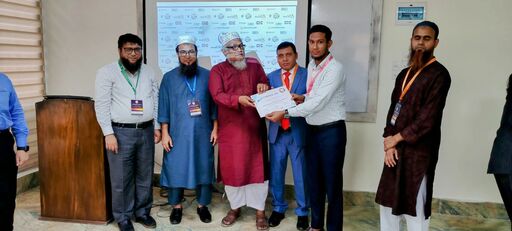
After Technical Session